
12/1/25
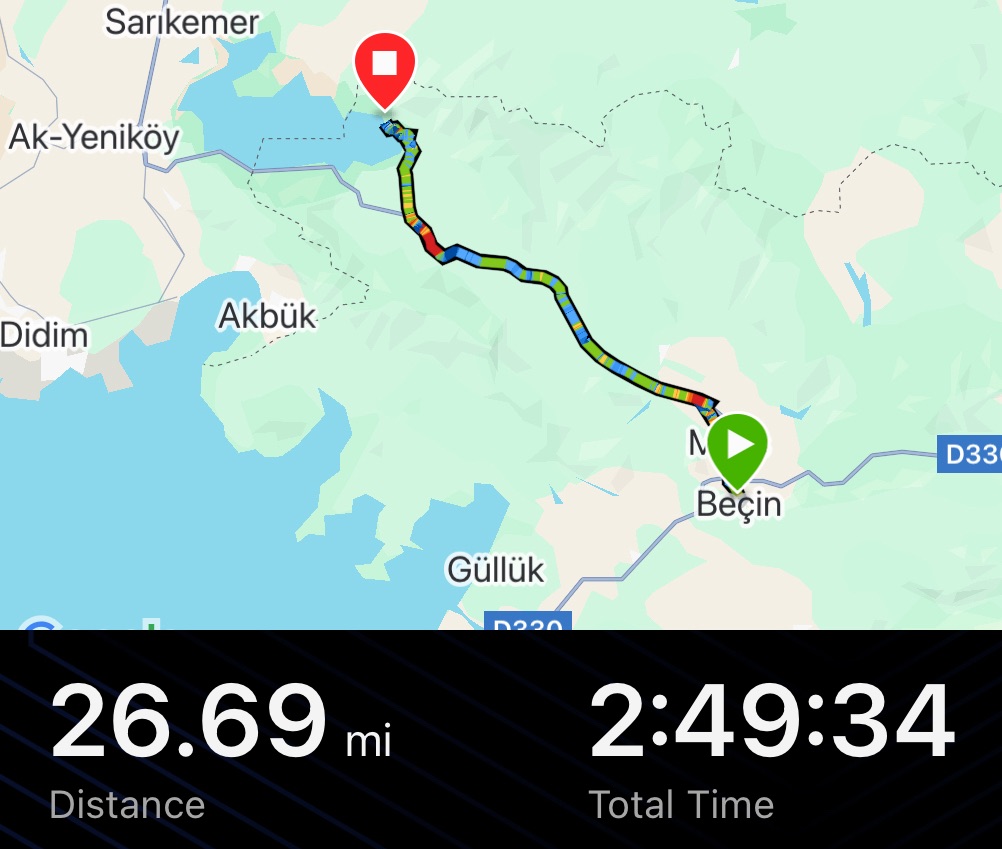
The forecast was wrong. Really wrong. It rained all night. It probably wasn’t as hard as it sounds underneath the amplifier of plastic sheeting but it was raining a lot. We woke up frequently during the night. It was hard not to worry whether the ground would saturate with water, if the tent would cope or any number of disproportionate worries.
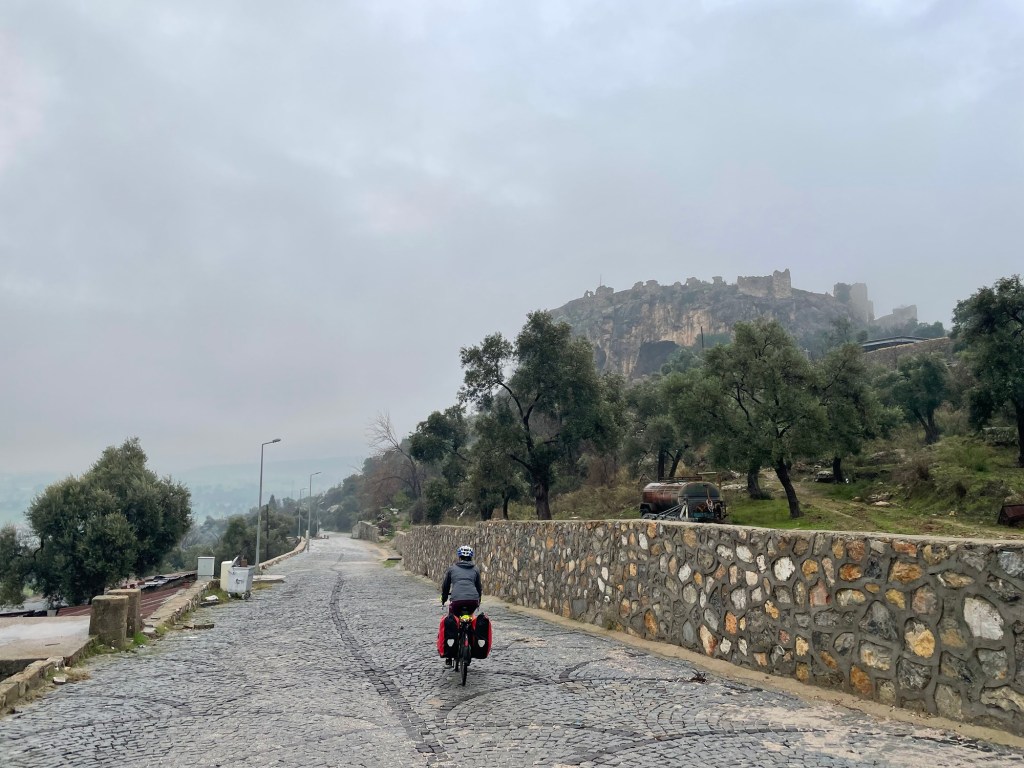
Sunrise is at about 8am in Turkey at this time of year. This suits us, but it hadn’t stopped raining yet. We decided to pack away as best we could, and wait for a dry moment. It wasn’t long waiting. The ground was a little wet, and some water had managed to get between the ground sheet and the tent, but nothing catastrophic had happened. The world looked misty down in Milas.
It was probably the fastest we’d ever packed up. Even with the soaking wet tent outer. We crammed it in a plastic bag, in an effort to keep the inner dry. We’d had ambitions to see the castle before we left but it felt like we were waiting for more rain. On the Turkish meteorological service it was suggesting a storm was coming. The warning seemed pretty dire and it was making us a bit nervous. We questioned whether we should ride anywhere.

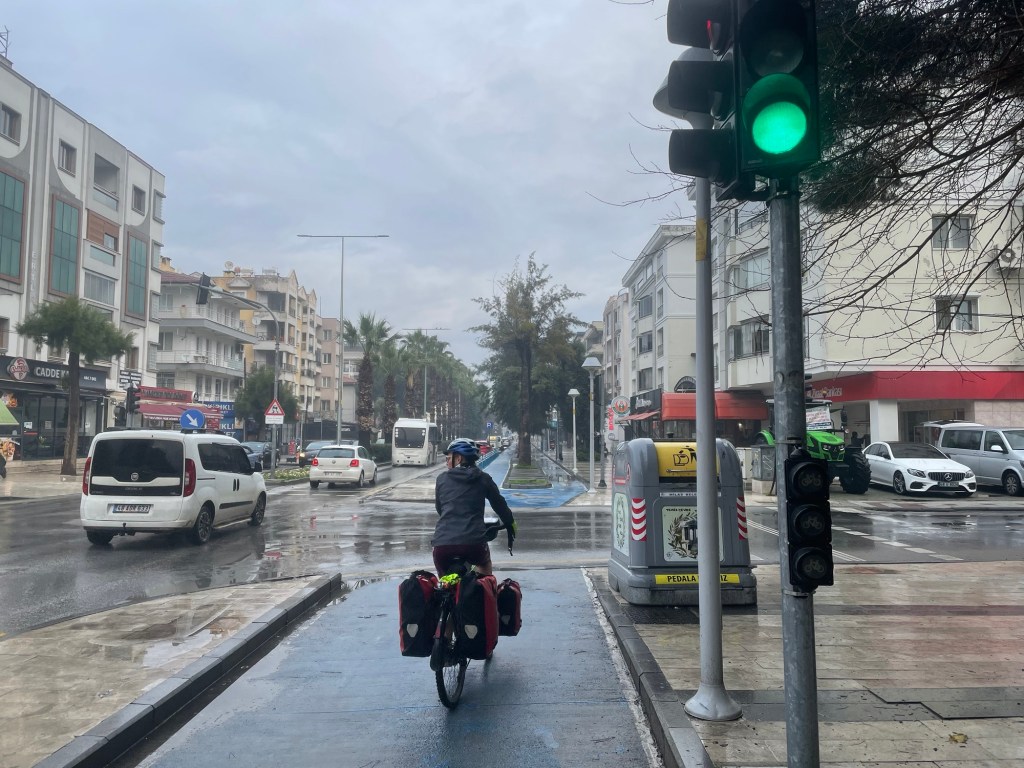
Milas wasn’t a very interesting town at first sight. Big D roads in and out dominated. Towards the north though, there was a part with smaller roads, and there were actually, wait for it, cycle paths. Yes that’s right, in Turkey. Azure blue, segregated and with their own traffic lights. Before we left the shops and restaurants we saw a cafe that was entirely outside and under cover that looked popular with the people.
We both ordered our usual Turkish coffees, which were a grand total of 50L. That’s about £1. It was a simple affair and the place was frequented by council workers in their big fluorescent jackets. While we were there we asked the younger server whether she knew anything about the storm. She didn’t, but read the alert, discussed with her colleagues, and told us it was only rain and the coast would be getting the severe rain.
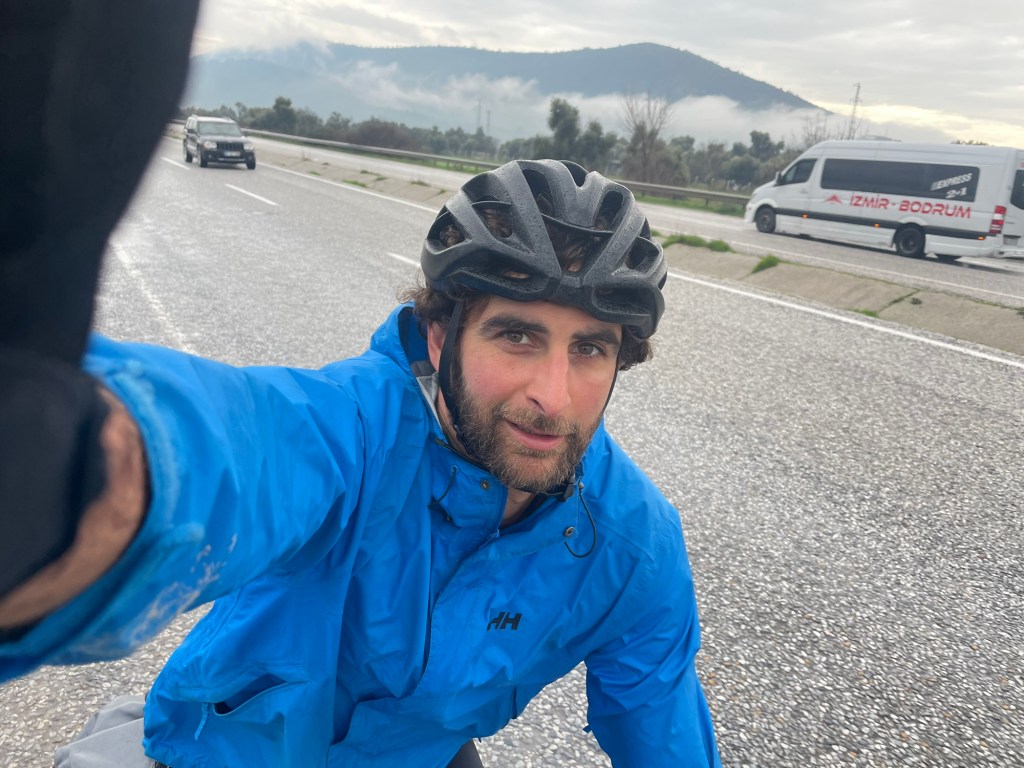
We left, feeling semi confident we would be okay. We had tried to avoid the D roads for as long as possible so we were cycling through the town of Milas for a while. Through all its neighbourhoods. There were lots of bakeries churning out Ekmek and Lavas, flat bread. It really is their staple. As we left through the housing estates there was a very (very!) loud speaker projecting something. Not a call to prayer, just words.

At the end of the village and up a steep hill was an abandoned building of some kind. It wasn’t sketchy. Lots of cars were coming past. We stopped to have a snack. While we were doing so a man stopped and asked if we needed anything. A warm shower for instance. We declined with the utmost gratitude and also asked him about the weather. Suddenly, as we moved close to the car, behind the heavily tinted glass, a woman appeared with a newborn baby and took us by surprise. He said the weather would be fine here. A second vote of confidence. It was all we needed to continue.

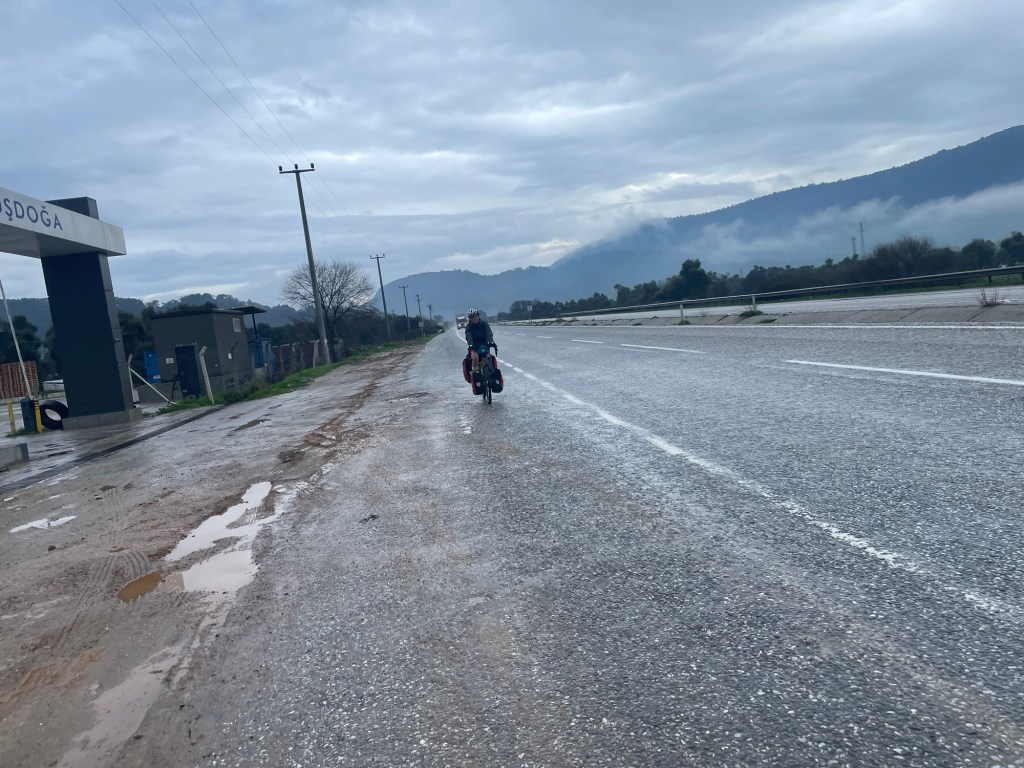
At the bottom of the rough road was an overpass that let us join the D525. A dual carriageway of course. It initially had slick back tarmac, but this soon gave way to rougher concrete embedded stones. It wasn’t anywhere near as busy as the day before. It wasn’t a very exciting road. The weather was bleak and on and off drizzling. But it could have been worse. There were huge fish farms and/or factories along the way.

On this road were the ruins of Euromos. An ancient city. It was very quiet, only one other car in the car park. While we were securing the bikes outside the ticket office a man came down from the ruins. He said he takes great interest in archaeology and would like to visit the site with us. We, of course, obliged. Ali took us around and explained the different aspects of each building. We also discussed ourselves in between.


Ali lived in Bodrum, he kindly invited us to come and stay with him. We were sad that we had to refuse his offer, it was back the way we had come! He had worked in a position of importance, a European wide agency, as a chemist. This had taken him around Europe, hence his fairly good English.
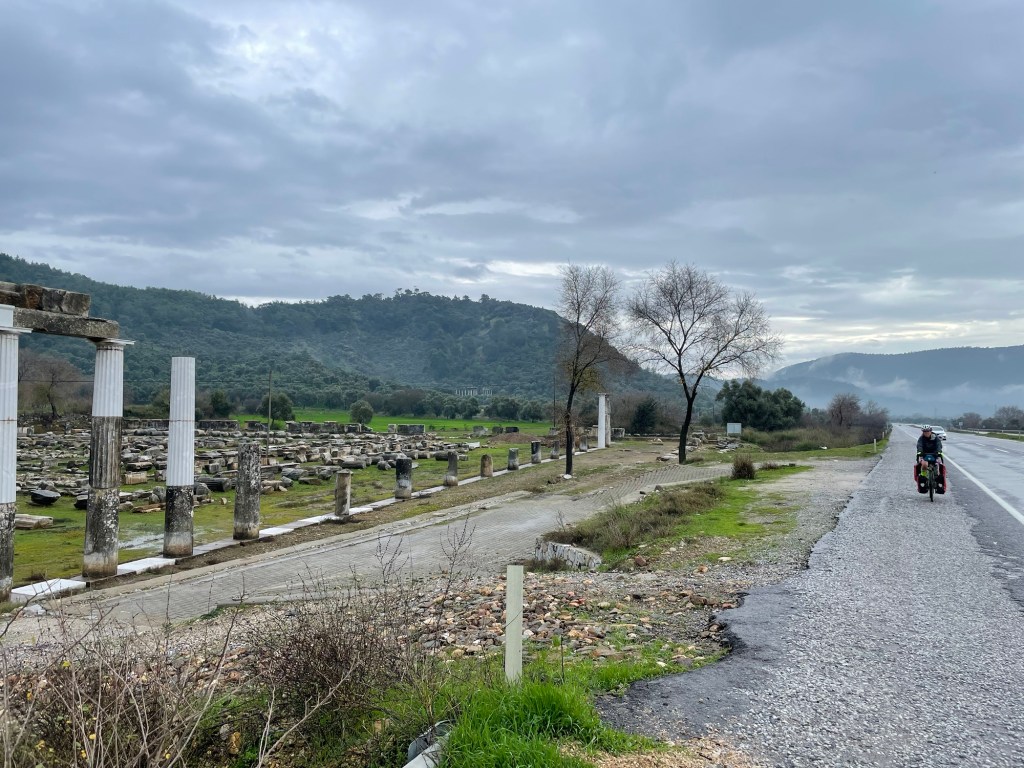
After bidding Ali farewell it was back to the dual carriageway. Strange how it has become such a usual way to travel. It would be actually considered insane to ride on anything like it in the UK. We had to climb a steep hill through a pass in the hills to get to Bafa Golu (Golu means lake). At the top there was casually a pile of rubber car mats burning. It was toxic obviously, though before knowing what it was there was a whiff of cheese toastie in the air.

At the top of the hill was a 250m long tunnel, no hard shoulder, so we stopped to put a rear light on just in case. Out the other side was a glorious descent with the lake coming into view. It was a shame it was a little cloudy, but it wasn’t raining. We found a supermarket in the village at the bottom to get dinner and then took the detour to Kapikiri. Oguzan had suggested we go and we also knew Quinn had been a few days prior. It had to be good.


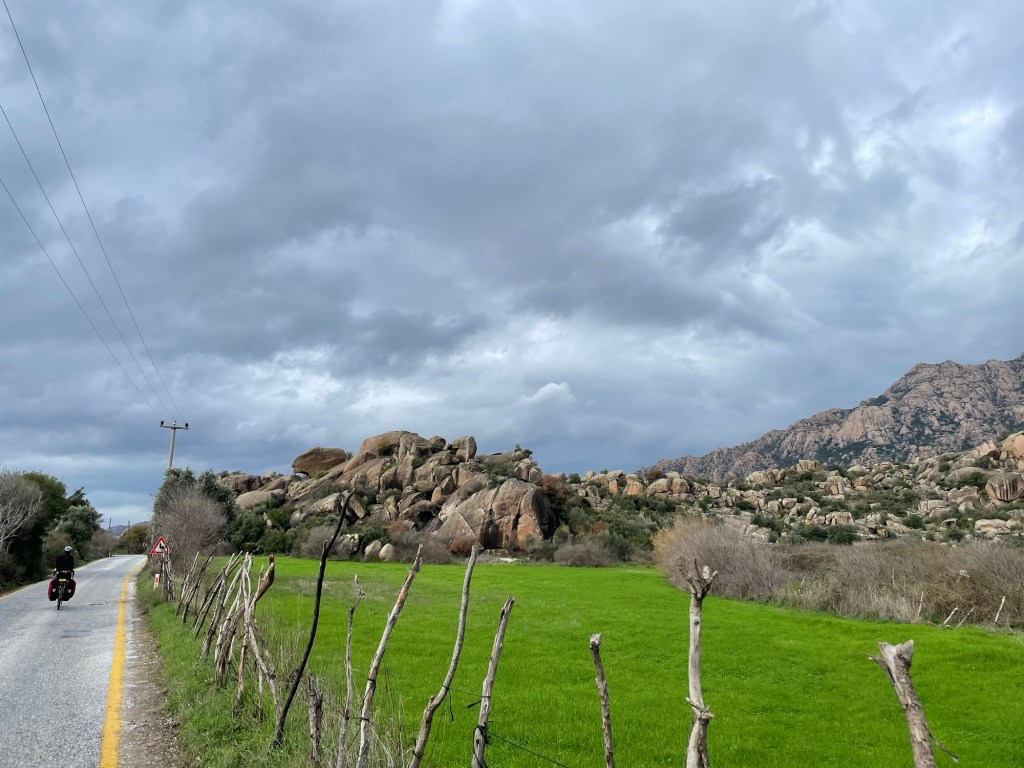
It was a boring straight road at first. However after passing the first village the Latmos mountains opened up in front of us. A wonderful rocky landscape. It’s a popular area for bouldering due to all the crags. The village of Kapikiri is also built on the site of the ancient city of Heracleia. There were many ruins of walls, gates and castles. There is even a harbour. That sounds stupid, but it wasn’t always a lake. It was actually the sea only 1200 or so years ago. This was a starting point for trade routes inland.

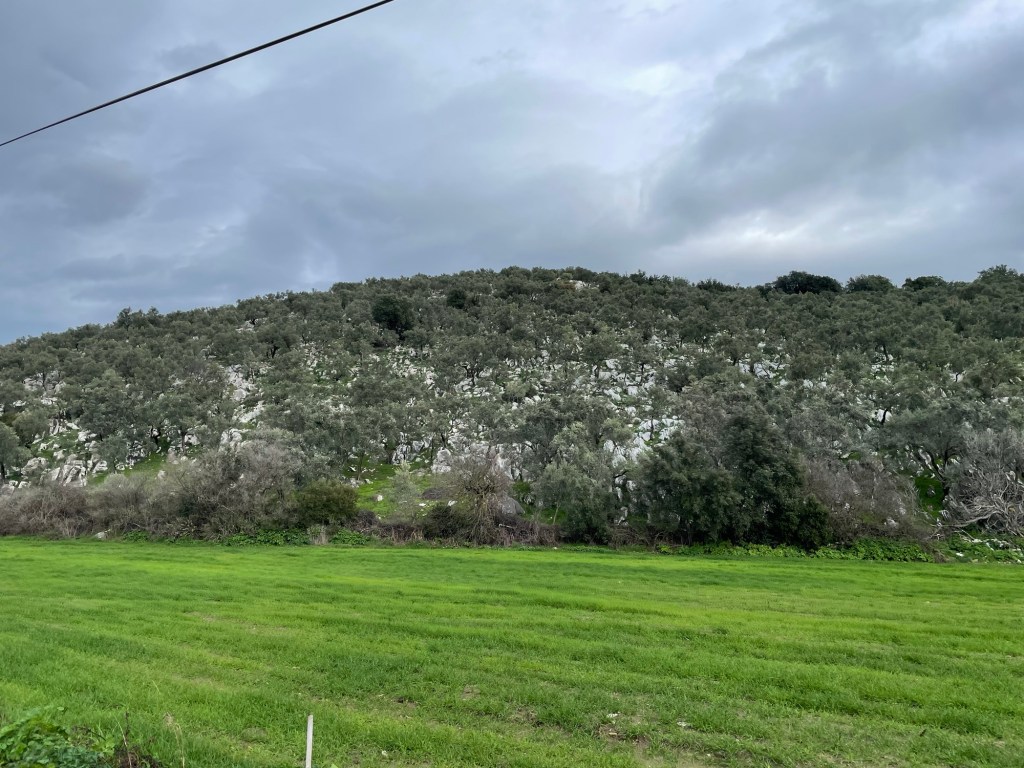
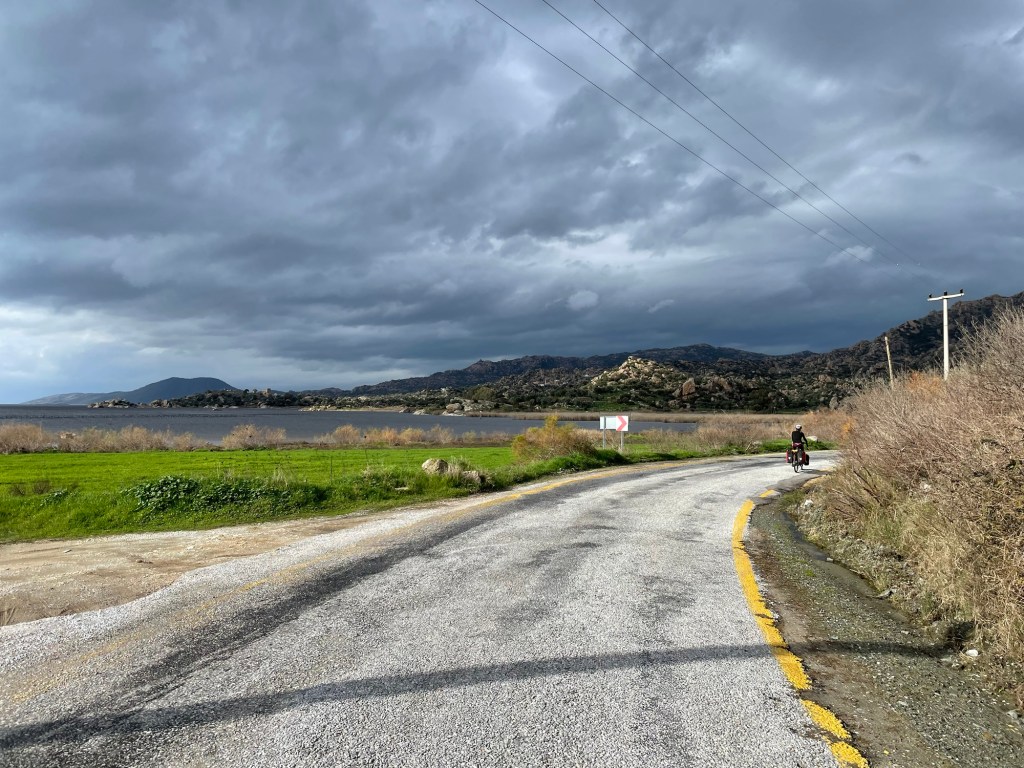

We went down to the ‘beach’. It was a good starting point for finding somewhere to camp. No one cares what you do on the shore. Especially in Turkey. We found a little hidden spot and made some tea, positioning the stove out of the wind between some rocks. It was still quite early. We saw many families perusing the area as well as fisherman heading out on their little boats. After we’d had dinner we set the tent up, which had a good slope towards the water.

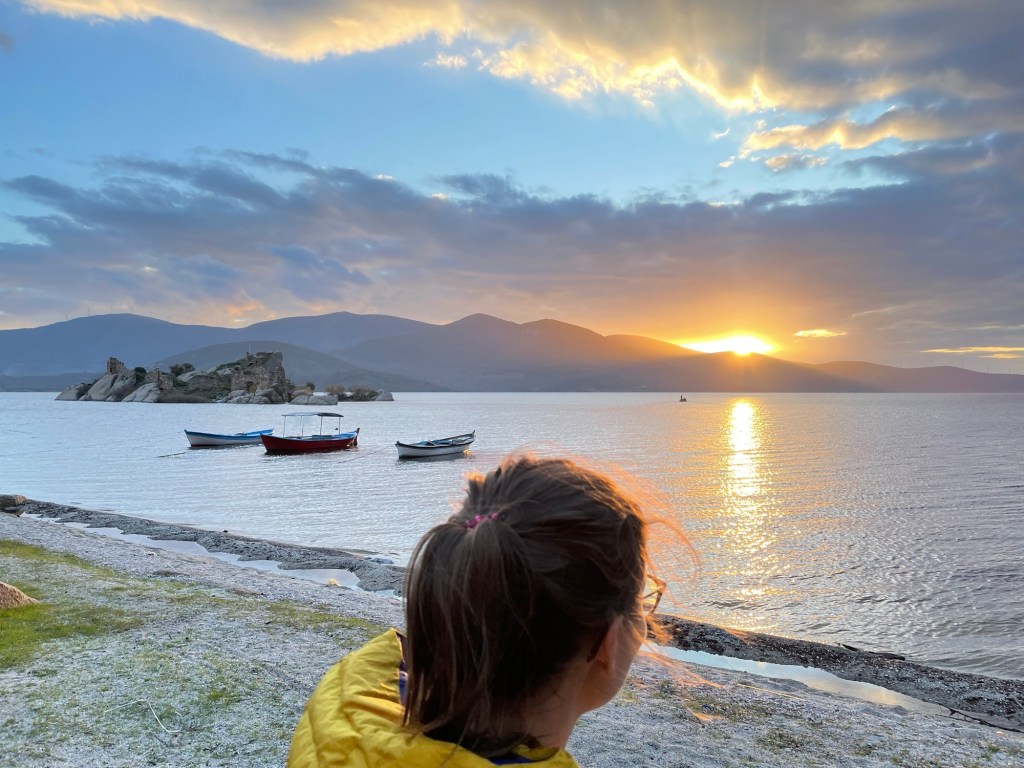
We looked towards the wind trying to perceive the weather. How close to the coast were we? The clouds sat on the mountain tops without shifting. Perhaps they would keep the worst of it away from us. We ate some more snacks and hoped for the best.

It was a little tense. We sat in the tent listening to the rain start to patter on the outside. Checking the radar and the weather apps proved fruitless. They neither provided enough granular information, nor reassurance of any kind. If anything they were stress inducing. Even more stress inducing was the Turkish meteorological website. It suggested that 20-50kg/m3 was possible. It’s hard to fathom what that even means. When we had asked Oguzan, he said he couldn’t explain it. It’s possible no one knows what it means. We decided that sometimes ignorance is better.
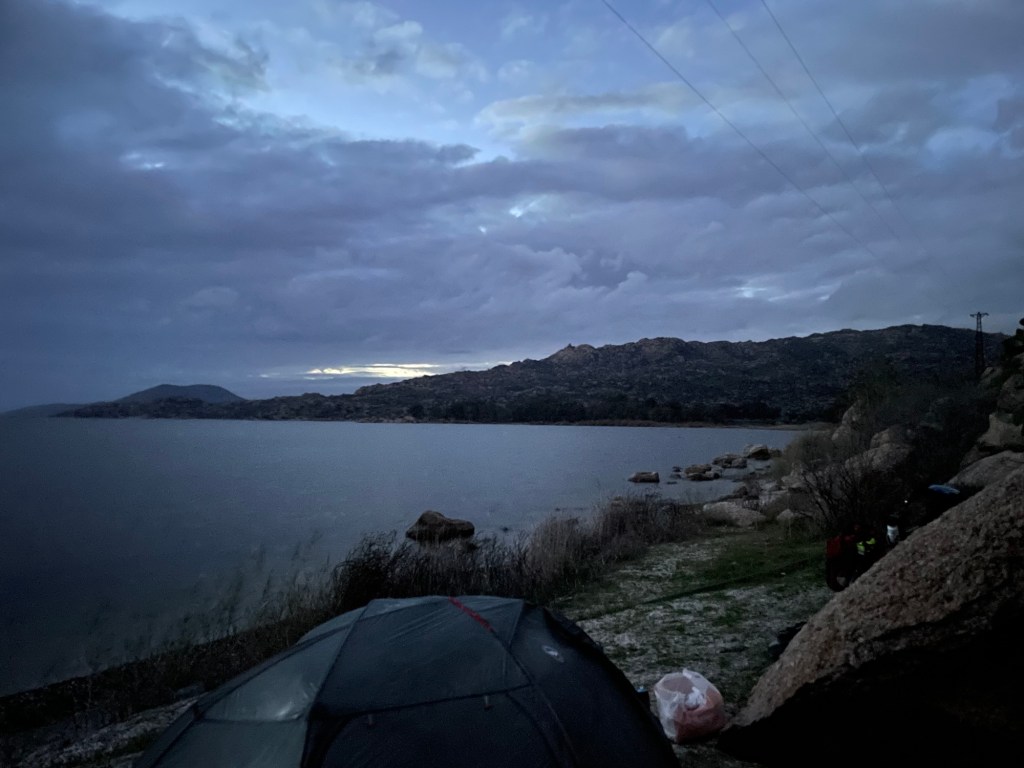
It was also a little bit windy. Far more than the 30km/h gusts that the apps had suggested. It would buffet the tent, pushing the wall in. We guide wired the tent. The stones were soft and loose, so we found rocks to weigh the guide wires down. We’d never had to bother before so they were all tied up in factory condition. We somewhat reluctantly got into our sleeping bags, it seemed unlikely we’d be doing much sleeping.

As we lay there we could hear drums banging in the distance, somewhere in the village. At least there were no cars playing loud music.
 Surly They Won't Make It