
27/7/25
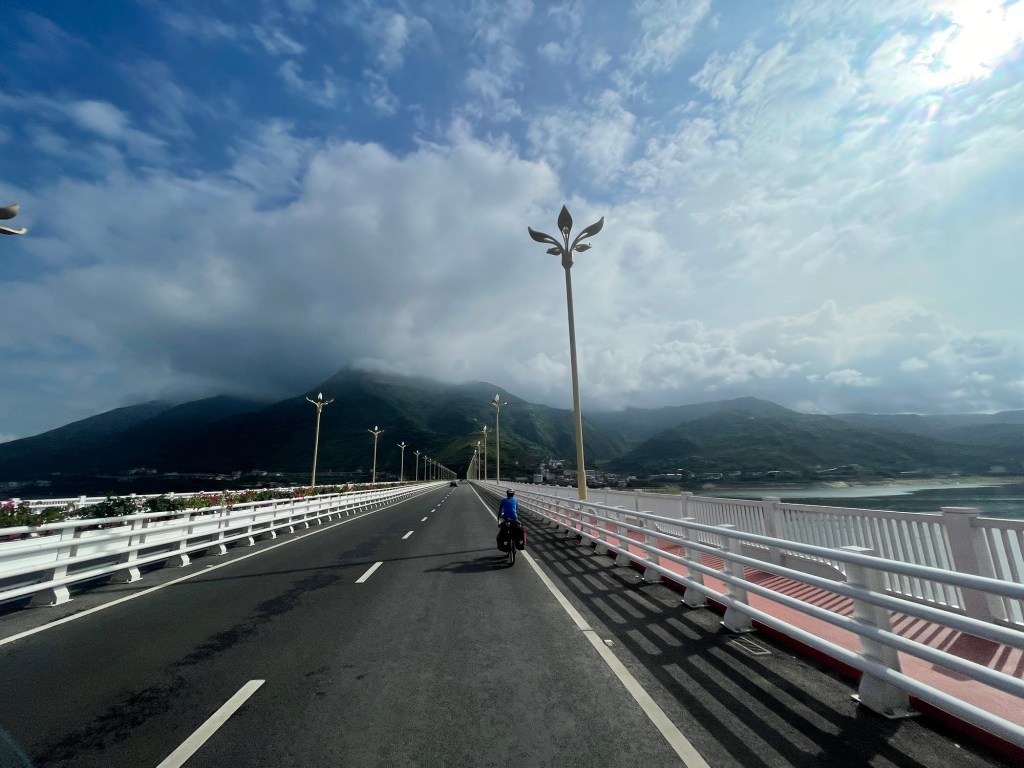
Crossing the Lanjiawan Grand Bridge, we left the peninsula and joined the S306 heading east. The rode climbing and falling continuously. Donning a face mask, we entered a lit, but unventilated tunnel that went for two kilometres. When we emerged we were taken to the banks of the river.
Tracing the edge of the still water could only be described as Greece, on crack. When we’d seen those cliffside roads months ago we’d been blown away by their beauty. They were nothing in comparison to this.

Quietly trafficked, it was a relaxing ride. Apart from the scarily overwhelmed landslide protection. Boulders and rocks had fallen to such an extent that the metal nets were buckled. China was beset by this problem. Pubugou dam dominated the area. Large electrified fences restricted the views. Tens of thousands of locals protested against its construction in 2004, their villages were soon submerged. One of the dissidents was executed, in secret.

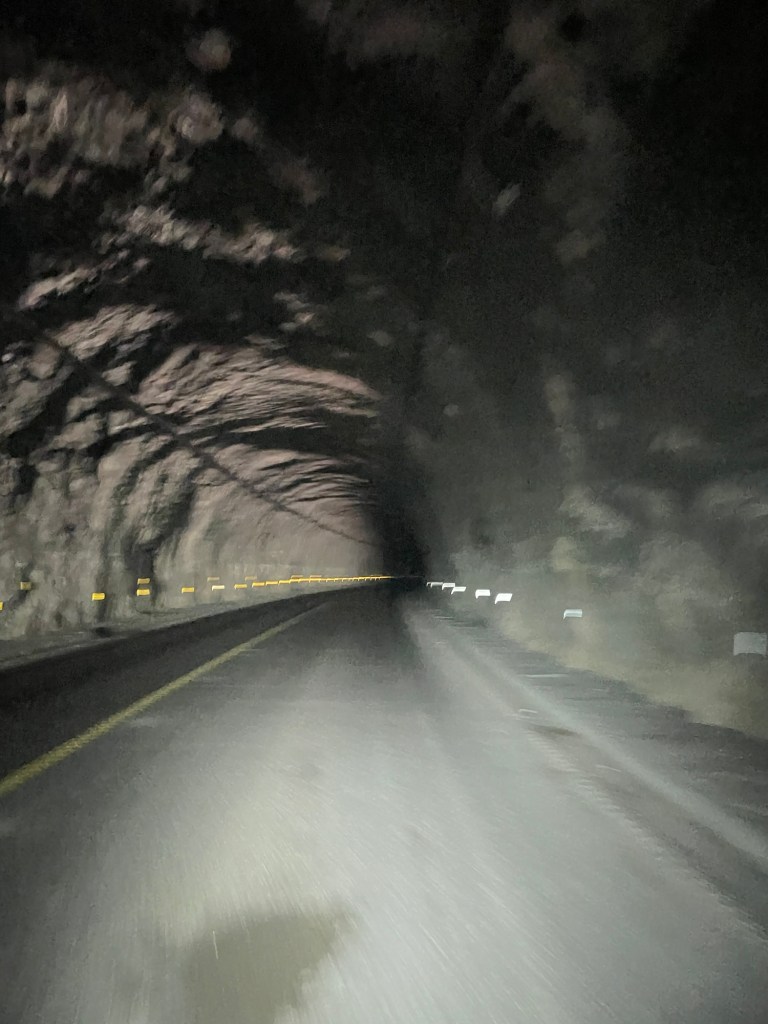
More long dark tunnels, one without concrete lining, preceded our descent down to the G245. Frankie’s crappy front light wouldn’t even turn on anymore. The button was jammed. The last had so many speed reducing bumps we felt like we would fall off any second. Lorries barricaded the big road at the bottom, police attempts to organise them were entirely in vain. We stopped for a cold(ish) drink.

As we left, on the now lorry filled road, we saw there had been a crash, hence the logjam. Wushi was a town overwhelmed by overpasses. Giant expressway legs stepped over and through the valley. It was our first sighting of the famous Kunming to Chengdu train line. The blackened iron bridge took the tracks across the river, from one mountain into another.

Climbing the hill into the town proved disheartening, Frankie jumped off to push up the steep hill. Mining operations crossed the gorge that had started to reveal itself. Dramatic, tall cliffs rose up above us, and the river. Mapy found it impossible to tell us the elevation change. The sudden cliff drops confused the software. The road climbed steeply along the cliffside. The hot Sun was making hard work harder. Lorries trundled past, filling the air with infuriating amounts of dust.
The bridge into the expected tunnel came into sight. A miniature, brightly coloured, Tyne bridge. Soon we were rolling through 4km of cool, enclosed heaven. On the other side we were hurled into the overwhelmingly beautiful gorge. Our GPS was out of sorts and didn’t know where we were. Tourist car parks and stalls popped up. The road was almost floating on the water all the way through. Jinkou Grand Canyon is famously pretty. The railway was running alongside, mostly buried inside the cliff, occasionally popping out on a brief tunnel.

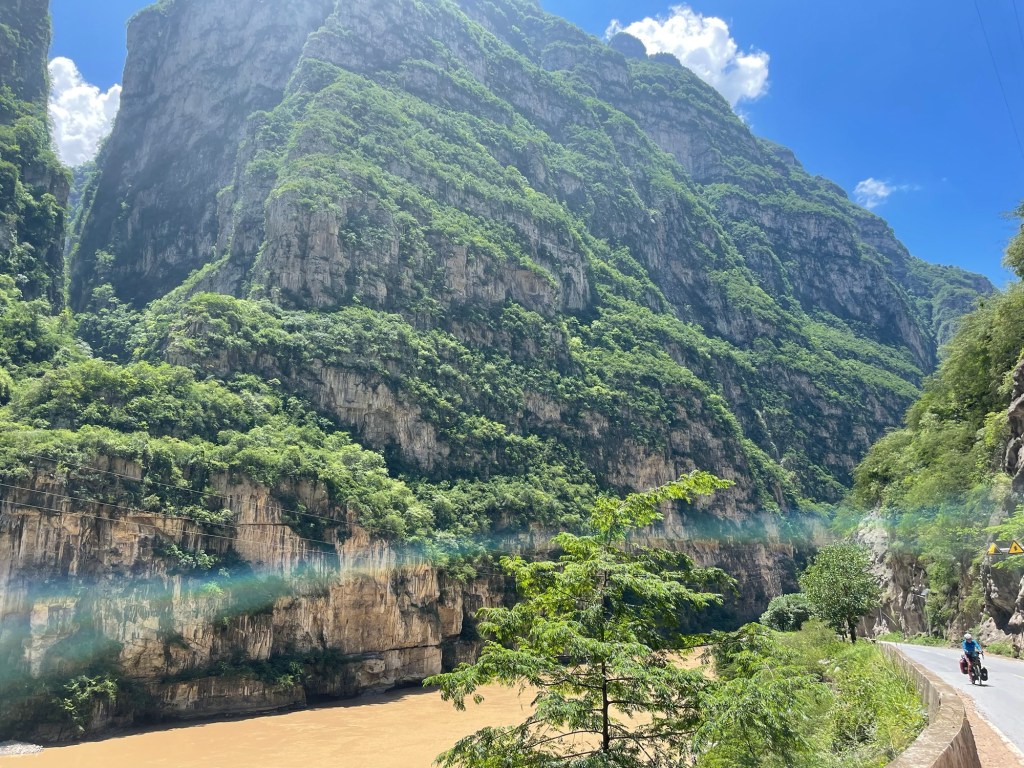
“Spectacular” couldn’t possibly do justice to the phenomenal space we were in. Our only wish was that it wasn’t blistering hot. Never mind. Merely 8km up the road was, Shenglicun, a small tourist village with several hotels. We couldn’t book them on trip.com, but we’d had that problem before. It didn’t mean anything. On our approach we found scores of cars parked on the side of the road. Not as bad as Pen-y-pass though.
The road was steep, made worse by incapable moronic car drivers. We pushed the bikes, being watched by the locals. Their gazes felt scrutinising. The most expensive hotel in the town, according to ctrip.com, was just at the top. When we arrived their faces were not confidence inspiring. Waving their hands, then translated, they told us, “No Foreigners!”
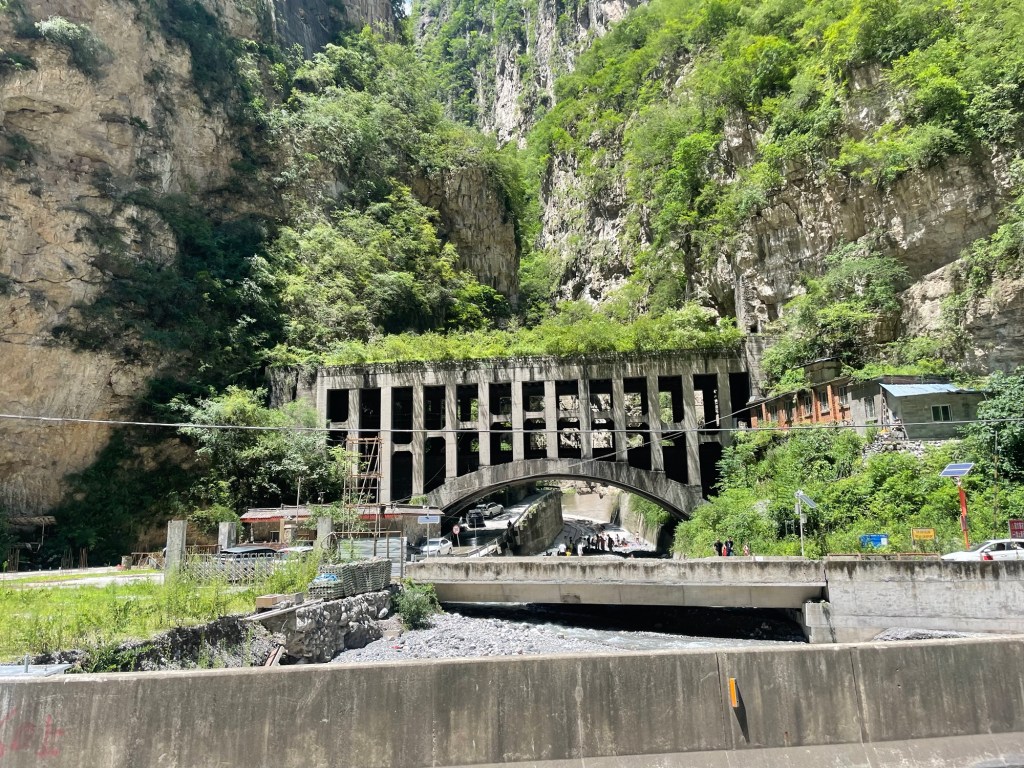
Being told you have to leave because of something you can’t change is never less than upsetting. Oddly, they tried to give us water and tea. Naturally, we refused. Who wants to take things when you’re not wanted. “Come in, take a rest” they suggested. Instead, we decided to try another hotel up the street.
The next hotel owner seemed far less sure of the situation. But still hesitated. A boy opposite in a restaurant looked on smiling. He told us there was a military base nearby. Perplexing, as all we could see was tourists! We began to get the uncomfortable feeling that everyone knew something we didn’t. Again, after the proprietor had a quick phone call with the police, we were invited to wait. “Someone will come and pick you up”.

We left, pissed off at having to go to the next town and being discriminated against. Flashing lights came towards us on the road. “Stop!” insisted the officer. Their initial desire to send us back the way we’d come was denied. No chance. Our refusal was sufficient. We could go the way we wanted but they’d escort us out. “We are quite slow”, we told them.

Off we went, police car in tow. If anything the canyon was more scenic than ever. Luckily it went on for 26km, so we had time to relax about our predicament. Occasionally, our car would speed up, overtake, then rejoin us up the road. Floating road that is. Before the tarmac, the gorge was almost inaccessible. Villages of the Yi people were away in the cliffs. Hours of hiking up mule paths, or using rope ladders. Now they were tourist attractions. For the Chinese anyway. Not for us.

Our chaperones were impatient when we stopped for water. More impatient still when we struggle to take our bikes through a detour and had to push. We still had zero idea where we were going. By this point we had decided to take it easy. If they wanted to follow us, it was their problem. Presumably, we were headed to the next town. Far past the point in the day when we wanted to be cycling, we arrived at Jinkouhe. Nope, we wouldn’t be stopping here. It was “confidential” we were told amusingly.
Erbian was another 30km. They didn’t care. We couldn’t do anything about it. Looking around us occupied our minds. Somewhere here was something we weren’t supposed to see? Everywhere looked like a very normal Chinese town, apart from the disdain we felt from the locals that looked at us. Motorcycle tourers went past, greeting us warmly. Huge amounts of infrastructure intrigued us. Perhaps the enormous dams they’d constructed were the hidden assets?
After leaving the ‘secret’ town we started heading uphill. Our friends then instructed us to take a break by a locked gate. They sped off in the opposite direction, while we ate a snack and mused over the ridiculously long ride we were being forced into.
Once they returned, we carried on. Still within the canyon as a yellow glow started to come over us. We couldn’t cycle very fast up the hills, they soon adapted, drifting along. Then after 10km more, they suddenly sped up, pulled over at the side of the road, took photographs of us and our passports, bid us goodbye, then apologised. We all laughed together at the hilarious situation. And that was it. Alone again.
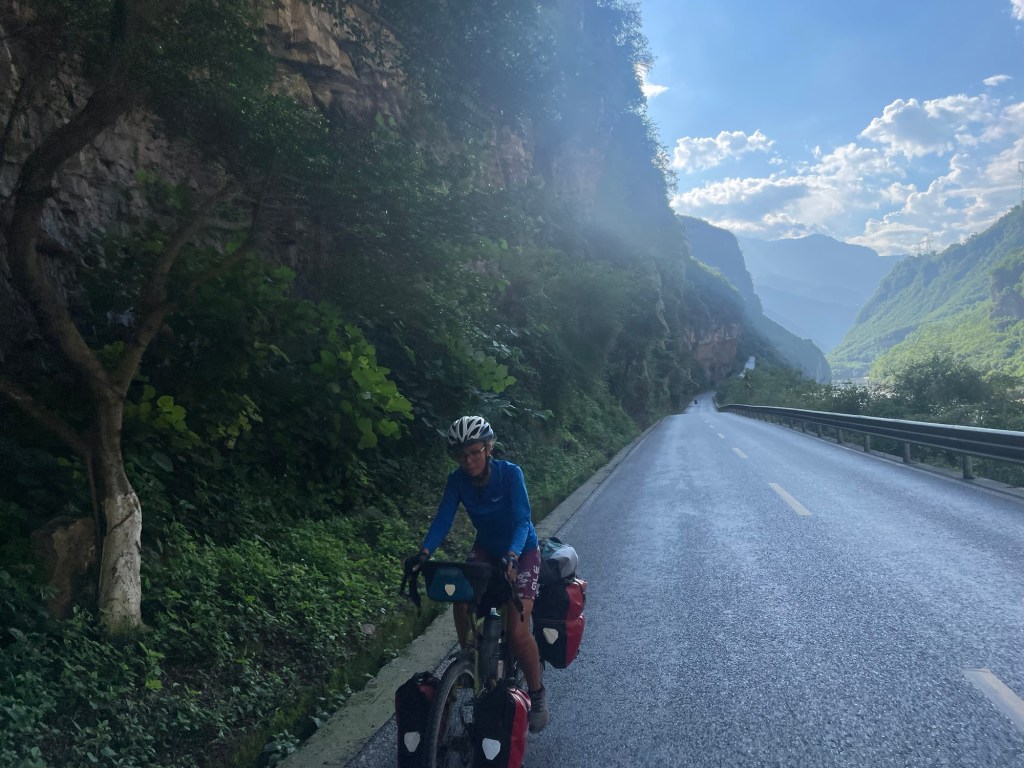
Overhanging cliffs, gushing waterfalls. Still not quite enough for us to do less than crave the sanctity of a hotel. Guanliaohe tunnel was 2km of perfectly tiled clean, smooth hill avoidance. Cleaner than most London Underground stations. On the other side we gasped at the sudden openness of our surroundings. A huge dam behind us.
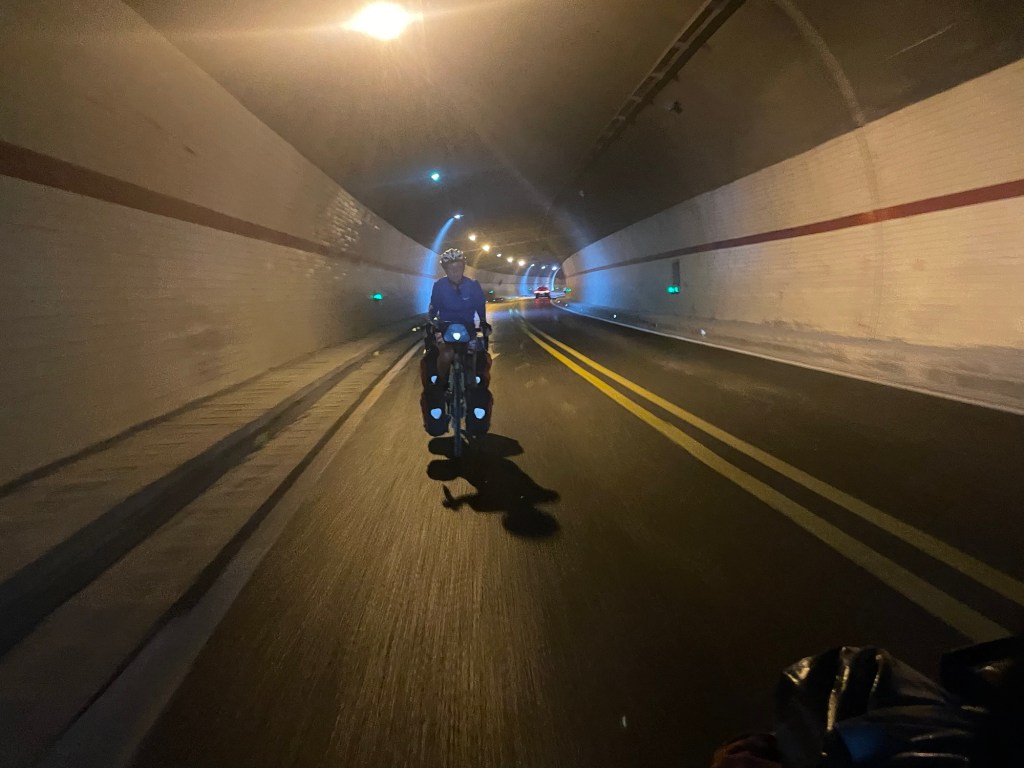
Trundling relentlessly on we assaulted the final hill before we rolled down into Ebian, heading straight for the most expensive hotel there was. That we could book on the English version Trip.com, done with being anywhere we weren’t wanted. Here we were welcomed, in the hotel anyhow. Walking along the street outside we couldn’t help but feel a divide. Older people looked at us in a rather strange way. One we hadn’t experienced before. In the rural parts of China’s empire we’d still been shown warmness, only on our exit from our hike, and now here, had we felt anything different.
Most of our eventing was spent speculating. Discoveries and inferences ranged from the embedded cultures of the Yi people, who even 30 years ago enslaved lower castes and obviously didn’t want to be invaded by the Han people. To the existence of the ‘318 Nuclear’ uranium enrichment plant that existed in Jinkouhe until the late 80’s. This was backed up by another cycle tourers experience of only being escorted past Jinkouhe. So why is the rest of the canyon off limits? Why were the villagers so excited to remove us from their tourist town? Jonathan had been really looking forward to seeing the railway museum.
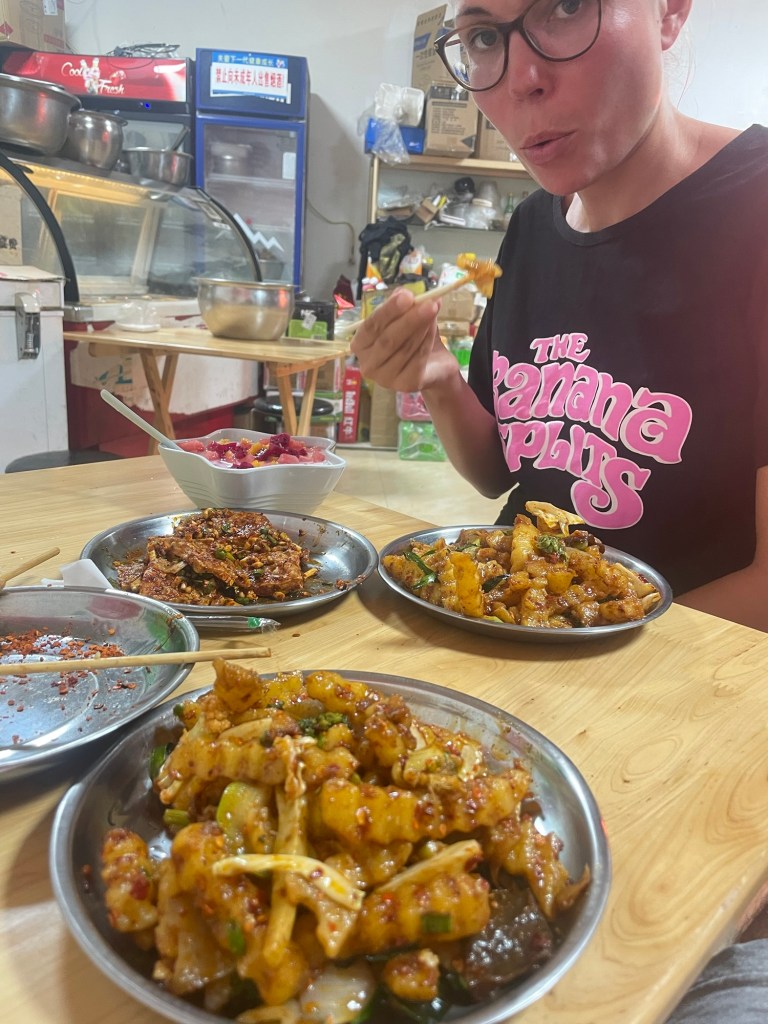
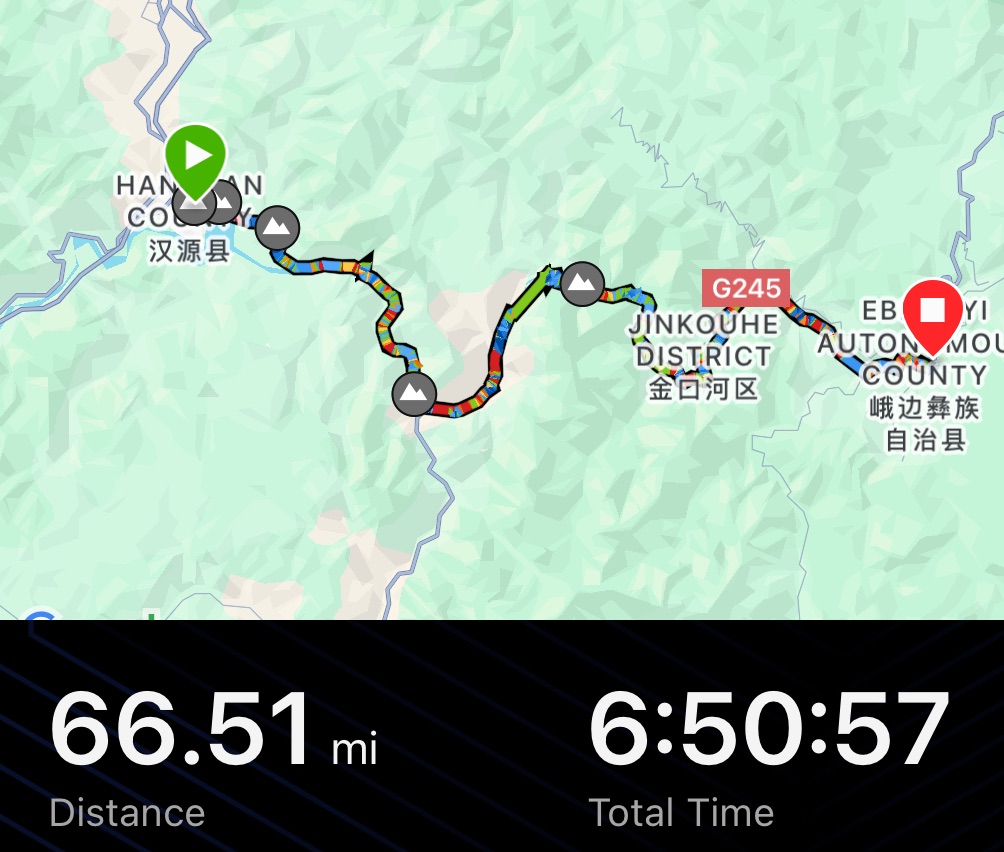
Strolling around the town eventually yielded an inviting restaurant. The tastiest potato chips in China as Frankie eagerly complimented them. It wasn’t hard. They just had to cook them. Served with roasted wheat gluten and stinky tofu skewers. Jonathan insisted on buying more durian from the large Century supermarket. Back in our hotel we celebrated our longest ride record for the trip. By just 1km. We’d hit 107km along with almost 1000m of climbing. Costly golden custardy durian was deserved!
 Surly They Won't Make It